
With the upcoming 2020 Presidential election, the candidates are looking to set themselves apart from a crowded group of Democrats. However, the main ideological battle seems to be between the moderates and those perceived to be radical.
In turn, Kirsten Gillibrand, Senator from New York and a Presidential candidate, has run a campaign on being a moderate.
But, though her response at a recent event is welcoming of opposing viewpoints, she still faces criticism of not being as moderate as she appears to be.
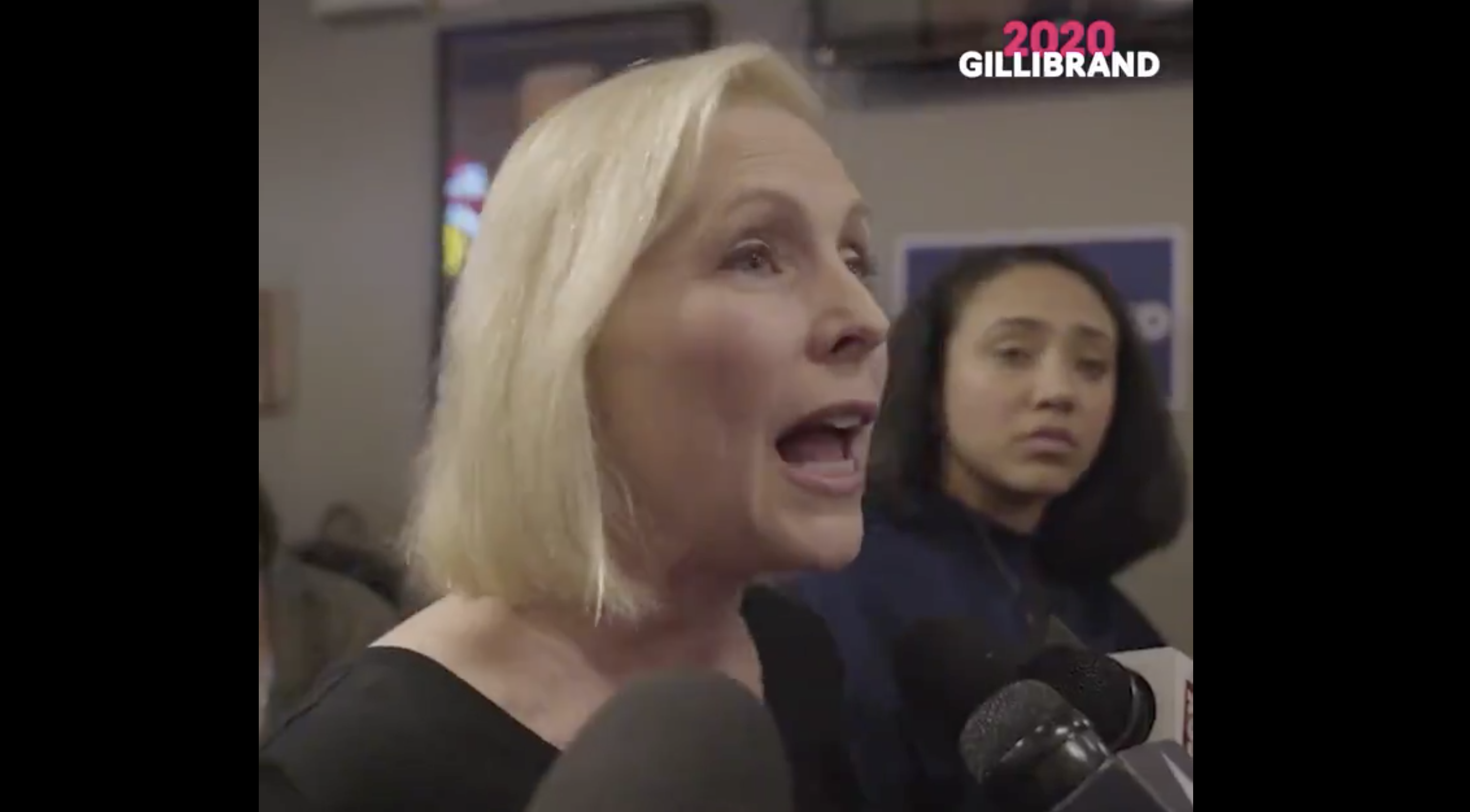
In a tweet, the NY Senator shared a video where she was asked why she believes she’s “the candidate who’s best able to take on Trump and get things done.”
Recently a reporter asked me why I think I'm the candidate who's best able to take on Trump and get things done. Here's my answer. pic.twitter.com/yT2FMFmEHL
— Kirsten Gillibrand (@SenGillibrand) April 16, 2019
In response, Senator Gillibrand explained that she has “the highest vote total in the history of New York at 72%,” which she attributes to doing “well in the red places, the purple places and the blue places.”
Gillibrand argued that she brings people together as a U.S. Senator, citing that she’s helped “pass big pieces of legislation like Don’t Ask, Don’t Tell repeal and passing the 9/11 Health Bill twice, unanimously.” She also noted that she’s worked on passing “smaller bills” as well, which include “money for rural broadband, money for made-in-America manufacturing.”
Gillibrand described that she listens to all her constituents, regardless of their political alignment, and that she absorbs any fears or concerns they might have to then “find common-sense solutions.” Ultimately, she expresses that it doesn’t matter if “it’s a Republican idea or a Democratic idea, it just matters that it’s a good idea.”
However, on fivethirtyeight.com, a website dedicated to tracking lawmakers and their voting record, it’s shown that Senator Gillibrand stands at 11.7% when it comes to voting “in line with Trump’s position,” and she has also received criticism for supporting measures such as the “Green New Deal” and “Medicare for All.”