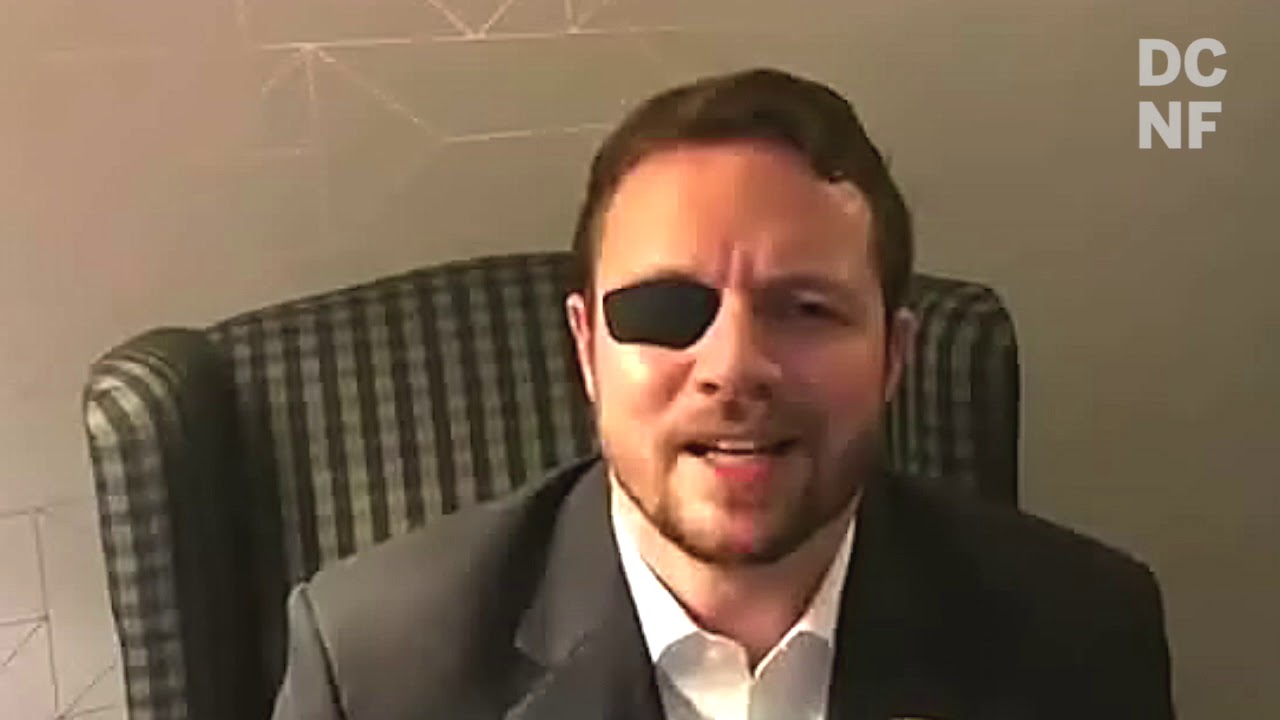

Rep. Dan Crenshaw is slamming Wajahat Ali, an attorney and contributing writer to the New York Times, who questioned his “patriotism” over social media.
Taking to social media to hit Crenshaw, Ali commented that “anytime a Republican says they are ‘patriots’ ask them if they voted to fund the 9/11 Victims Compensation Fund. You know who’s for it? Ilhan Omar. You know who hasn’t sponsored it? Dan Crenshaw.”
Then, Ali suggested that Crenshaw “do the right thing,” questioning “if not, why aren’t you?”
In response, Crenshaw, who’s no beginner when it comes to Twitter, “checked” Ali by calling him a “journalist” and suggesting that “maybe you should check your facts.”
He informed Ali that he is a co-sponsor of the 9/11 Victims Compensation Fund.
Hey “journalist,” maybe you should check your facts. I am a co-sponsor. Nice try though.
Also, “patriotism”: https://t.co/3jSAFc5prw pic.twitter.com/1GURun1cr4
— Dan Crenshaw (@DanCrenshawTX) June 11, 2019
When it comes to Ali questioning Crenshaw’s “patriotism,” the Freshman rep. from Texas shared an X-Ray picture showing his skull and where he’s missing his right eye, which he lost in Afghanistan.
A former Navy SEAL, Crenshaw was serving in the Helmand Province in Afghanistan in 2012.
He was injured when an improvised explosive device detonated, and he lost his right eye. In turn, he required surgery to save the vision in his left eye.
Earlier this year, he was dubbed “Captain America” after he met with Chris Evans at the U.S. Capitol.
In the meeting, he showed off his Captain America inspired glass eye, and he shared a picture of the two on social media, which he captioned with “when Captain America sees your Captain America glass eye.”
When Captain America sees your Captain America glass eye. #merica pic.twitter.com/0xHb9GjSmV
— Rep. Dan Crenshaw (@RepDanCrenshaw) March 8, 2019
In response, Evans noted that it was “a VERY cool use of vibranium.”
https://twitter.com/ChrisEvans/status/1104208871797727232
Both Crenshaw and Omar have verbally sparred in the past after Omar made controversial statements during an appearance at a Council on American-Islamic Relations banquet where she commented that “CAIR was founded after 9/11 because they recognized that some people did something and that all of us were starting to lose access to our civil liberties.”
To this, Crenshaw expressed that “the broader point that she was making is perfectly fine. The broader point that she was making is that the organization CAIR defends civil liberties and that there was concern about civil liberties post-9/11. That doesn’t change the fact that you refer to 9/11 in a dismissive way, both in tone and in gesture, and in words, as some people did something.”